nature.erholt. Magazine

Moor phenomenon: wobbly forest in Bad Buchau

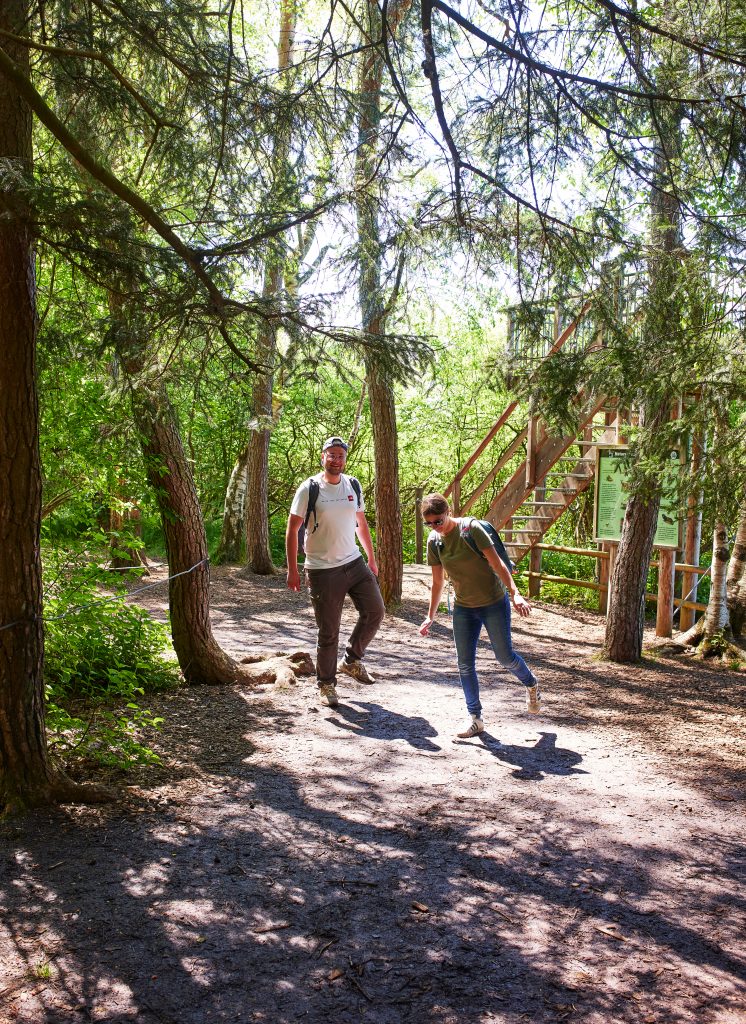
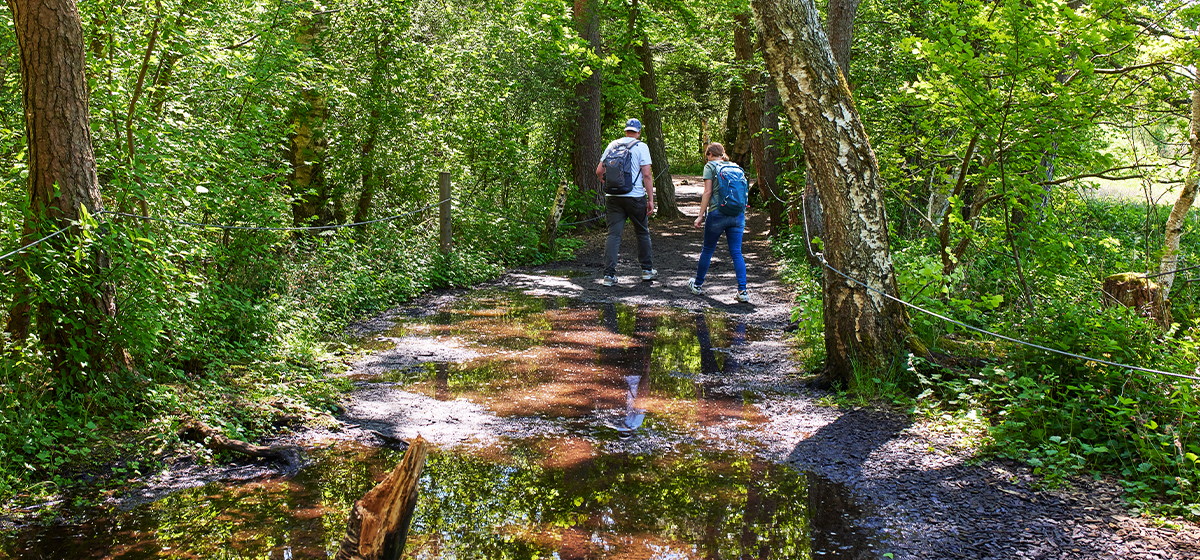
A special moor phenomenon on the outskirts of Bad Buchau is the so-called Wackelwald. It is a special excursion destination for the whole family and is open to all interested visitors.

Where does the name Wackelwald come from?

Quite simply, the trees in the forest stand on boggy ground that was created by the silting up of the post-glacial Federsee lake. A stable surface layer has formed between the roots of the trees and plants, under which is spongy soft peat soil. The soil gives way with every step and is therefore springy. This makes it very popular not only with visitors, but also with locals for jogging, for example.

History of the forest:

There used to be an ice pond in the forest, which was used by a brewery to cool the beer cellar. After reforestation, a spruce forest later developed here. Today, the forest is no longer used for forestry and continues to develop into a near-natural moorland forest.


Plants and animals of the forest:

The forest is not only a popular excursion destination, it is also a habitat for a variety of trees, plants and animals that call the moorland forest their home:

Plants and trees:

  • Bog birch
  • Pine tree
  • Spruce tree
  • Mountain ash
  • Different types of pasture

Animals

  • Squirrel
  • Woodpecker 
  • Songbird
  • Deer

Discover the forest on the wobbly forest trail:

The Wobbly Forest Trail is an approx. 600-metre-long NABU nature experience trail that leads from the Federsee parking lot through the Wobbly Forest via 8 stations. At the interactive stations and viewing points, nature lovers of all ages can learn about the formation of the Federseemoor and the inhabitants of the forest. 

Participation stations:

  1. Forest biocoenosis
  2. Why is the forest wobbling?
  3. Buttons instead of sight
  4. Scattered meadow viewing platform
  5. Observation tower for mammals on the Federsee moor
  6. Hear, see, be silent
  7. Tree phone
  8. Amphibian pond

A little tip: If you want to have even more forest experience, you can rent a ready-packed nature exploration backpack from the NABU Nature Conservation Center for a small fee.

Wackelwald – Bad Buchau

More articles

Die Kraft der Erde

Die heilende Wirkung von Moor, Fango, Schlick, Lehm und Kreide ist seit Jahrhunderten bekannt. Bereits im 14. Jahrhundert wurden Moorbäder als Heilmittel urkundlich erwähnt. Heute sind Fangopackungen, Torfbäder und Lehmwickel mit ihren entspannenden und entzündungshemmenden Eigenschaften ein wichtiger Teil der natürlichen Gesundheitsbehandlungen in Heilbädern und Kurorten und unverzichtbar in der modernen Therapie. Indikationen: Wobei kann Erde […]
View article

Entstehung von Mineralwasser

Natürliches Mineralwasser ist mehr als nur Wasser. Es ist reinstes Trinkwasser, welches durch Regenwasser und einen langen natürlichen Weg entsteht. Doch wie genau entsteht dieses besondere Wasser, das uns erfrischt und gleichzeitig mit wertvollen Mineralstoffen versorgt? Der Ursprung liegt in einem langen, faszinierenden und individuellen Prozess, der unter der Erde stattfindet. Wie entsteht Mineralwasser? Alles […]
View article

Kulturelles Erbe – Badekultur der Römer in Baden-Württemberg

Bereits die alten Kelten nutzten die göttliche und heilende Kraft des warmen Wassers. Die Römer die etwa 70 vor Christus das Gebiet des heutigen Baden-Württembergs besetzten, nutzten nicht nur die Thermalquellen der Kelten, sondern übernahmen sogar ihre Götter und machten sie einfach zu den Gefährten ihrer eigenen. Doch für die Römer waren die Thermalquellen keine […]
View article
1 2 3 9
Follow us:
Heilbäder und Kurorte Marketing GmbH
Esslinger Straße 8, 70182 Stuttgart
en_USEN
WordPress Cookie Notice by Real Cookie Banner