
Anja Wicker has a clear focus - even when it comes to regeneration. The Paralympics winner likes to relax in spas.
Born in Stuttgart in 1991, the biathlete started cross-country skiing at the age of 13 and has been competing in cross-country skiing and biathlon since 2006. In addition to many other successes, she won gold in the 10 km biathlon distance in Sotchi in 2014 and became world champion over 12.5 kilometers in 2017. In 2022, she returned from the Paralympics in Beijing with a bronze medal. Here she tells us what she loves about her sport, how important regeneration is and why she loves the brine chamber in Bad Krozingen's thermal spa.

Ms. Wicker, first of all, congratulations on your "place on the podium" in Beijing. How long did it take you to recover from your brilliant performance on the cross-country ski run?
I wanted to sleep for four weeks straight, but I've recovered well in the meantime. However, I have already allowed myself a longer break, which has been neglected in recent years. I do a bit of sport too, but I definitely don't call it training.
You are also a very strong cross-country skier and have already won medals there. Why do you mainly compete in the biathlon?
I'm excited to be competitive in cross-country skiing. But biathlon will always be my focus. The combination of total exertion on the track and precise work at the shooting range is a great challenge and simply my passion.
After winning gold in Sochi, how do you rate your current bronze medal?
The gold medal in Sotchi definitely means the most to me. I can still remember many moments during the race. They still give me goosebumps today. But after not winning a medal at the Paralympics in South Korea, I'm over the moon about my third place, especially as I had to make up for five penalty laps.
How often do you actually have to train to achieve such success?
My training year always starts on May 1. During the first few months, the focus is on endurance and strength training. The closer the season gets, the more frequent the intensive sessions become. On average, I train six days a week, usually twice a day. That brings me up to ten to 18 hours.
How important is regeneration then? And where do you prefer to regenerate?
Regeneration is a very important aspect of everyday training. If you can do that in a spa clinic like Bad Krozingen with thermal water, that's great, of course. Going to the brine chamber every evening was a great opportunity for me to do something special for my lungs.
Thank you very much for the interview - and good luck for the future!
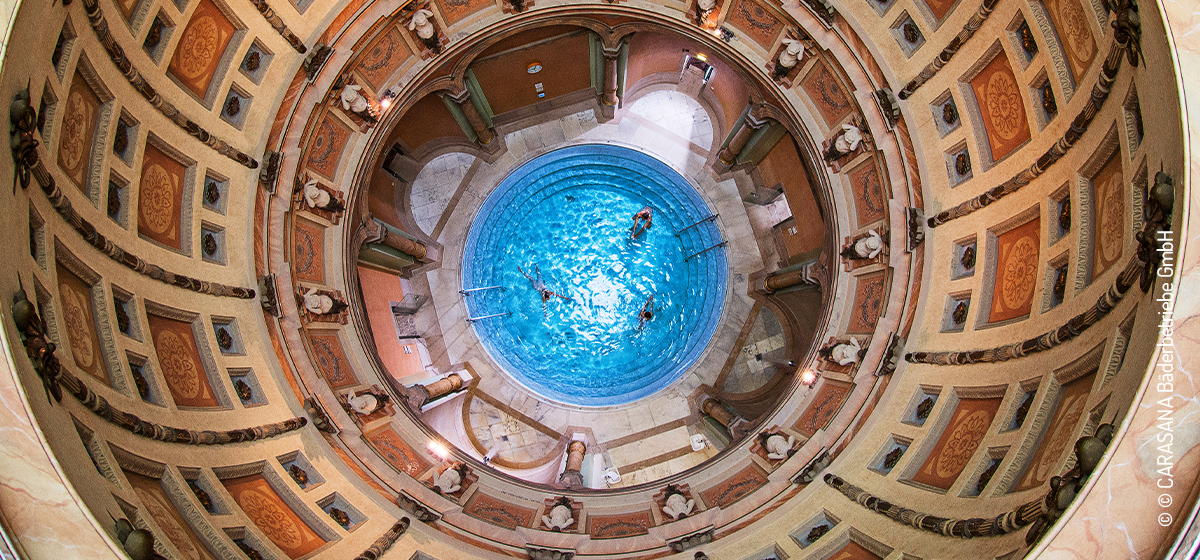
The Bad Krozingen thermal spa - the Vita Classica - has developed into a stylish yet functional spa palace with a spacious thermal bath, a sauna paradise and the wellness house. The brine chamber is one of the thermal spa's special experiences. The interior is an allergen-free room made of salt, glass and natural wood with a high-quality microclimate. Appointments to visit the brine cabin can be booked online.

 EN
EN  DE
DE  FR
FR